

Saturday Blog
Coming Home to Books

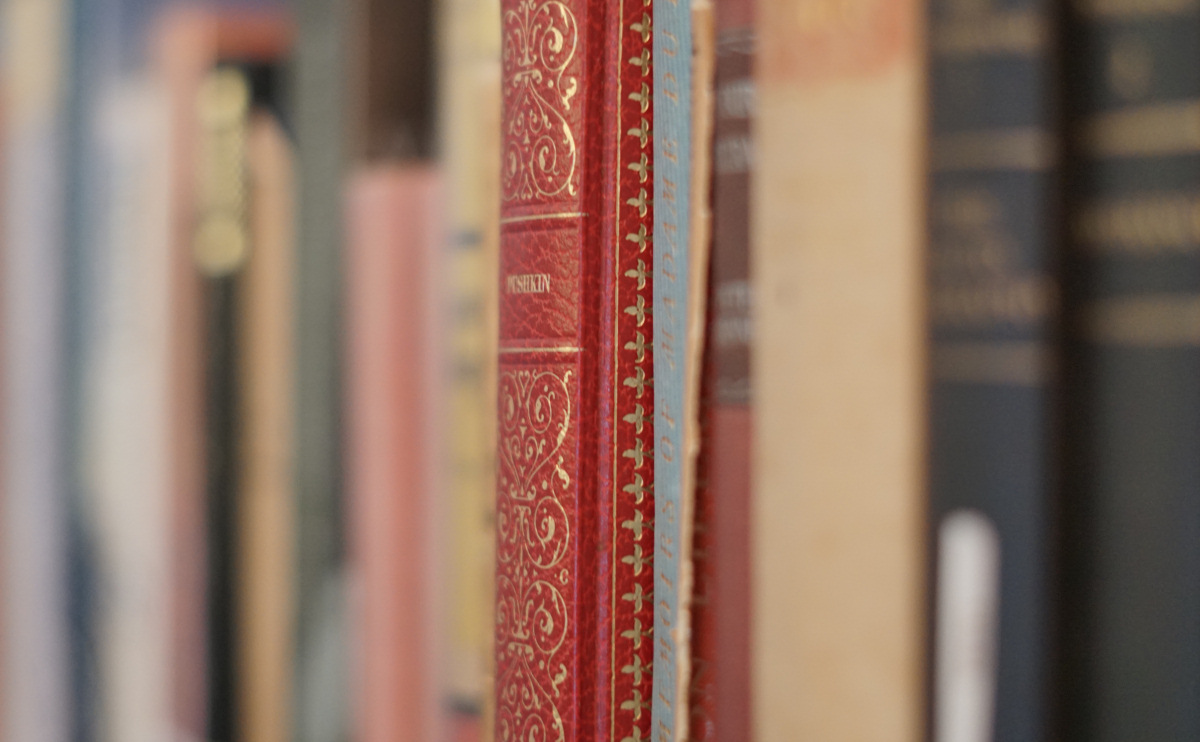
My grandparents were idealistic Edwardians who having received an education maintained that education throughout a lifetime. From this, the exchange, purchase, giving and receiving books seemed to an important part of their lives. I know this from the inscriptions, sometimes touching, in their collections the remnant of which I have at Saturday Books. It has passed down three generations.
Their Ruskin, Dickens and Eliot, acquired at the beginning of their century, came to me at the beginning of mine. And many more, as important for our day as for theirs. The gold lettering had glowed from bookcases, their un-sheared pages yellow in the gloom of attic shelves. Through a shop, they would continue to live.
Knowing nothing of the book trade, or even of commerce, I set up first in Stone Street and then in Tower Street. While my ignorance continued to count against me, it was balanced by luck. Not only the gift of my own forbears, but the generosity of those I was yet to know. Summerhill Books in Halesowen closed, and I took away everything, including shelves, in eight precarious car-and-trailer loads.
Together with existing stock, I estimated ten thousand books. Gaining control over such mass was more than I alone could do, so for during the first six months of 2016, I employed an input-er, whose neatly-numbered sticky labels still feature on the books’ spines.
Meanwhile, I continued to work as a supply teacher, a life of giddy elevation and crushing despair. Not unreasonably, since the shop could not be opened during the week due to my absence, it took the name Saturday, since that alone could be guaranteed. Regrettably short-term in its function through extension of hours (Open Monday to Saturday, middle of the day, longer in other seasons) the title nevertheless is unusual (temporal rather than related to place) and may even suggest what weekends, when the work is done, are truly for.
It is like being in a sailing boat, without much idea of navigation, nevertheless reaching shore. One such landfall was the incorporation of a university-age part-time student at the College. (All credit to you, Zak Bates.) He brought the impetus to use technology, as well as rigorous norms by which to judge the financial success of the business. He was right to do so: through our financial stability, we have been able to be outward-looking, and offer paid work-experience to undergraduate and school students, and, through Sandwell Council, to a young man with autism, who may take up paid work with us.
Meanwhile, there are regular customers from all walks of life, whose requirements are diverse. Out of the shop, and then in their hands, the book becomes a live entity. Our ideas of technology develop, most particularly in how the physical shop can interact with the online presence. But we come back to the beauty of print, and the strength of binding, and these objects that can outlast us all.